✨ This article was AI edited. Editorial responsibility: TheLivingDiet.net.
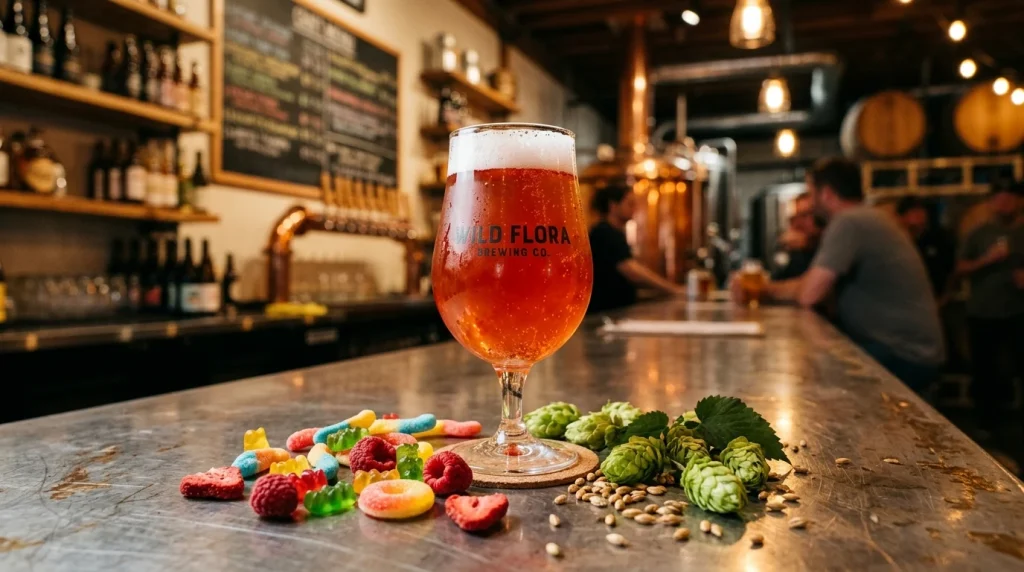
Making beer with Skittles (often termed ‘Skittlebräu’ in brewing culture) is the specialized homebrewing and craft brewing technique of introducing fruit-flavored chewy candies into the wort boil or secondary fermentation vessel. This process infuses fermentable simple sugars, distinctive fruit esters, and citric acidity into base beer styles like kettle sours, blond ales, and hard seltzers.
Contents
The Science of Confectionery Fermentation: How Candy Sugars Behave in Wort
In modern craft brewing, experimental adjuncts have expanded far beyond traditional fruit purees and spices. Confectionery brewing represents an intriguing intersection of industrial food chemistry and microbiological fermentation. When incorporating Skittles into a beer recipe, brewers must understand how confectionery ingredients interact with Saccharomyces cerevisiae (brewer’s yeast) and the thermodynamic properties of the wort.
Skittles consist primarily of sucrose, corn syrup, hydrogenated palm kernel oil, modified corn starch, and citric acid. During the boil or secondary fermentation, the disaccharide sucrose is inverted by yeast invertase into glucose and fructose, which are 100% fermentable, while modified corn starches contribute body or potential haze. Understanding the rate of enzymatic cleavage allows the brewer to accurately calculate original gravity (OG) and final attenuation.
Nutritional and Chemical Impact on Fermentation Kinetics
| Brewing Stage | Methodology / Addition Point | Primary Chemical Reaction | Flavor & Sensory Outcome | Potential Brewing Pitfalls |
|---|---|---|---|---|
| Late Boil (10–15 mins) | Dissolving separated candies directly into boiling wort. | Thermal breakdown of carnauba wax; complete sanitation. | Mellow fruit character, light residual sweetness. | Wax buildup on kettle walls; scorched sugar on heating elements. |
| Secondary Fermentation | Soaking candies in high-proof neutral spirit, then racking beer over. | Direct extraction of aromatic esters and volatile fruit compounds. | Vibrant, sharp candy fruit aroma and distinct acidity. | Risk of wild bacterial contamination if not sanitized. |
| Color-Separated Additions | Sorting single colors (e.g. all Wild Berry or all Red/Strawberry). | Targeted chromatic and single-ester infusion. | Predictable flavor profiles (e.g., pure raspberry or citrus lime). | Labor-intensive manual sorting process required. |
| Candy Syrup Reduction | Simmering candies in distilled water, skimming surface oils/waxes. | Phase separation of palm oils and carnauba wax from sugar syrup. | Clean, wax-free sugar addition for bottle conditioning or kegging. | Requires precise Brix hydrometer measurements. |
| Post-Fermentation Blending | Direct dosing of stabilized, pasteurized candy reduction into bright tank. | Non-fermented sucrose preservation under potassium sorbate stabilization. | High perceived sweetness, authentic candy mouthfeel, fruit soda finish. | Requires sterile filtration and chemical stabilization to avoid re-fermentation in kegs. |
Managing Oils, Waxes, and Head Retention Challenges
The primary technical challenge in candy brewing is the presence of lipids and polishing agents. Skittles are coated in a microscopic layer of carnauba wax and contain hydrogenated palm kernel oil within the chewy core. In brewing science, lipids are notorious for destroying head retention by destabilizing hydrophobic polypeptide bubble matrices.
Professional Techniques for Wax and Lipid Elimination
- The Cold-Crashing Skim Method: Dissolve Skittles in warm distilled water (approx. 160°F / 71°C), chill the mixture in a refrigerator until the palm oils and carnauba wax solidify at the surface, and skim off the hardened top layer before adding the syrup to the fermenter.
- High-Dextrin Grain Bills: Incorporate higher percentages of Carapils, flaked wheat, or malted oats into the grain bill to boost foam-positive proteins, compensating for minor lipid traces.
- pH Management: The high citric acid concentration in Skittles can significantly lower wort pH. Monitor with a digital pH meter to ensure the mash stays above 4.2 during primary fermentation to prevent yeast stress and stalling.
- Centrifugal & Fining Clarification: Utilize gelatin, Biofine Clear, or bentonite finings during cold conditioning at 32°F–34°F (0°C–1°C) to drop out colloidal particulates and haze caused by modified food starches.
Step-by-Step ‘Skittles Sour Ale’ Homebrew Recipe (5 Gallons)
For homebrewers aiming to craft a balanced, refreshing fruited kettle sour or fruit blond ale with candy adjuncts, follow this standardized 5-gallon commercial-scale formulation:
Grain Bill & Fermentables
- Pilsner Malt: 7.0 lbs (63.6%) — provides crisp, clean fermentable malt sugars.
- White Wheat Malt: 3.0 lbs (27.3%) — delivers head retention proteins and subtle bready sweetness.
- Flaked Oats: 1.0 lb (9.1%) — enhances silky mouthfeel and body.
- Candy Adjunct: 2.5 lbs of color-sorted Skittles (Wild Berry or Original blend, wax-separated syrup).
Mash & Boil Parameters
- Single Infusion Mash: Mash at 150°F (65.5°C) for 60 minutes for high fermentability.
- Mash Out: Raise to 168°F (75.5°C) for 10 minutes; sparge with 170°F (76.7°C) water.
- Boil Duration: 60 minutes total.
Hop, Kettle Souring & Yeast Schedule
- Kettle Souring (Optional): Pitch Lactobacillus plantarum (e.g. GoodBelly probiotic shot) at 95°F (35°C) until pH reaches 3.4–3.6 (typically 18–24 hours), then boil to pasteurize.
- Bittering Hops: 0.5 oz Hallertau Mittelfrüh @ 60 min (approx. 10–12 IBUs). Keep IBUs low to avoid clashing with fruit acidity.
- Yeast Selection: US-05 American Ale Yeast, Imperial A04 Barbarian, or Philly Sour yeast fermented at 66°F–68°F (19°C–20°C).
- Candy Addition Timing: Add the prepared Skittles candy syrup on Day 4 of active primary fermentation to preserve delicate aromatic volatile fruit esters.
- Cold Conditioning & Packaging: Cold crash for 48 hours at 34°F, add clarifying finings, and package to 2.6–2.8 volumes of CO2 for brisk effervescence.
Frequently Asked Questions About Brewing Beer with Skittles
Can yeast ferment the sugar in Skittles?
Yes. The primary sugars in Skittles are sucrose, glucose, and fructose, which are fully fermentable by standard ale and lager yeast strains, resulting in increased alcohol by volume (ABV) and a crisp, dry finish.
Does Skittles beer taste overly sweet?
Surprisingly, no. Because brewer’s yeast ferments nearly 100% of simple candy sugars into alcohol and carbon dioxide, the resulting beer is quite dry and crisp, retaining tart fruit notes from the citric acid rather than sticky cloying sweetness.
How do you prevent cloudy wax residue in candy beer?
Dissolve the candies in warm water, refrigerate overnight to solidify surface carnauba wax and palm oils, and skim the top layer before adding the clear syrup to the fermenter.
What beer styles work best with Skittles adjuncts?
Berliner Weisse, Gose, Kettle Sours, American Blonde Ales, and Hard Seltzers are ideal styles that harmonize with high-acid, fruit-forward confectionery profiles.
How much alcohol does a bag of Skittles add to a 5-gallon batch?
A standard 1-pound bag of Skittles contains approximately 0.9 pounds of fermentable sugar, contributing roughly 0.007 to original gravity (OG) and adding about 0.8% to 1.0% ABV to a 5-gallon batch.
Get our latest guides, news, and insights highlighted in your Google Search & AI Overviews.