✨ This article was AI edited. Editorial responsibility: TheLivingDiet.net.
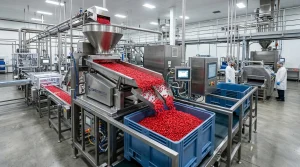
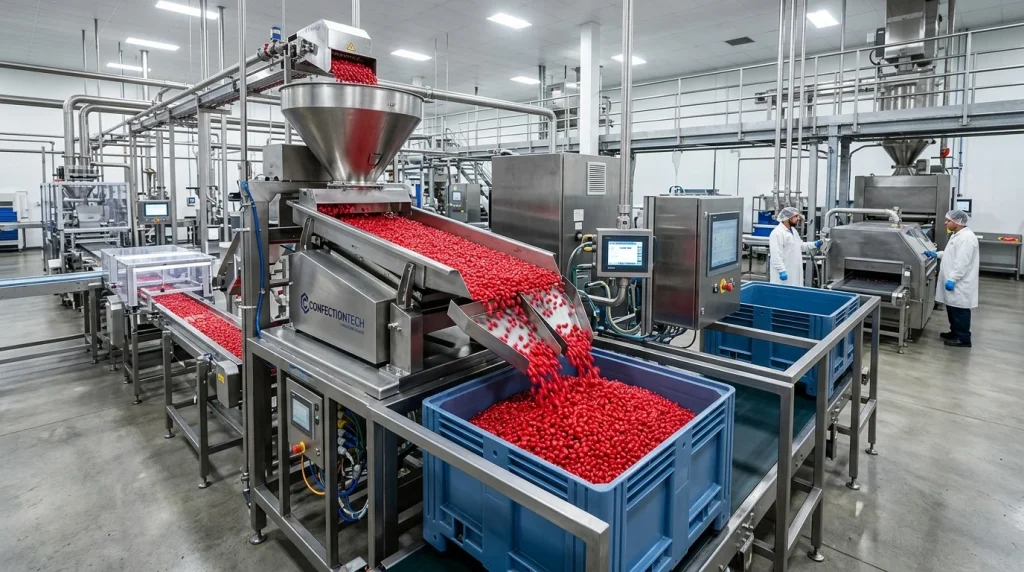
Red jelly beans manufacturers are commercial industrial confectionery enterprises that utilize advanced hot-starch mogul casting, revolving pan-coating drums, and automated optical sorting systems to mass-produce single-color red gourmet jelly beans across standardized flavor formulations for global retail, private label, and B2B wholesale distribution.
Contents
- The Industrial Engineering of Red Jelly Bean Production
- Leading Global Manufacturers and Private-Label Capacities
- Regulatory, Allergen, and Food Safety Standards for Wholesale Buyers
- Frequently Asked Questions About Red Jelly Bean Manufacturing
- How long does it take to manufacture a single batch of gourmet red jelly beans?
- What creates the shiny red coating on jelly beans?
- How do manufacturers achieve intense fruit flavor in the center and shell?
- What are the primary certifications commercial buyers should look for?
- Can red jelly beans be manufactured with all-natural plant colorings?
The Industrial Engineering of Red Jelly Bean Production
Manufacturing gourmet jelly beans is one of the most complex, time-intensive processes in confectionery food science. Unlike hard boiled sweets or poured gummies which can be produced in hours, authentic gourmet jelly beans require a 7 to 21-day manufacturing cycle involving gelatinization, curing, multi-stage engrossing, and polishing.
Industrial red jelly bean manufacturing commands massive market share due to recurring demand across consumer holidays, wedding catering, corporate merchandising, and institutional bulk confectionery repacking. Understanding the thermodynamic parameters of candy panning allows buyers to assess quality and batch consistency.
Core Industrial Phases in Modern Confectionery Facilities
| Manufacturing Stage | Industrial Machinery Employed | Thermodynamic & Chemical Process | Quality Control Metric | Typical Time Duration |
|---|---|---|---|---|
| 1. Slurry Cooking & Slumping | Continuous Coil Steam Cookers | Gelatinization of modified corn starch, sucrose, and fruit juice concentrates. | Brix measurement (78–82° Bx), moisture content (18–22%). | 20–45 minutes |
| 2. Mogul Casting & Starch Curing | Automated Starch Mogul Machines | Depositing liquid jelly centers into cornstarch mold impressions. | Moisture migration into starch; ambient drying at 120°F (49°C). | 24 to 48 hours |
| 3. Revolving Pan Engrossing | Stainless Steel Revolving Coating Pans | Sequential layering of flavored syrup and fine sucrose crystals (soft panning). | Shell thickness, uniform diameter, shell-to-core weight ratio. | 2 to 4 days |
| 4. Color Layering & Polishing | Polishing Kettles with Air Jets | Application of Red 40 / Anthocyanin dye solutions followed by beeswax and carnauba glaze. | Specular gloss reflectance, non-tacky surface sheen. | 8 to 12 hours |
| 5. Curing & Final Grading | Climate-Controlled Curing Rooms | Stabilization of moisture equilibrium across internal core and crystalline shell. | Water activity (aw < 0.65), structural rigidity, defect sorting. | 7 to 14 days |
| 6. Optical Sorting & Packaging | High-Speed Laser Sorters & Multi-Head Weighers | Defect rejection based on chromatic variance, misshapen beans, or doublets. | Count per pound (380–420 beans/lb), seal integrity, metal detection. | Continuous flow (1,000–5,000 lbs/hr) |
Leading Global Manufacturers and Private-Label Capacities
The worldwide industrial manufacturing ecosystem for red jelly beans is anchored by a select group of heavily certified, high-capacity facilities:
Prominent Industrial Producers
- Jelly Belly Candy Company (Fairfield, CA & Rayong, Thailand): The gold standard in gourmet center-and-shell flavoring. Produces iconic red varieties (Very Cherry, Red Apple, Sizzling Cinnamon, Pomegranate) with custom private-label bulk packaging capabilities and SQF Level 3 certification.
- Ferrara Candy Company (Chicago, IL): Operates mega-scale Mogul casting facilities supplying traditional pectin and starch-based jelly candies (Brach’s brand) for tier-1 supermarket chains and club stores.
- Gimbal’s Fine Candies / Mount Franklin Foods (San Antonio, TX): Industry leader in allergen-free confectionery, utilizing real fruit juice concentrates and non-GMO corn syrups in dedicated nut-free plants.
- Just Born Quality Confections (Bethlehem, PA): Renowned for high-temperature spice and cinnamon pectin formulations (Mike and Ike / Hot Tamales lines) with immense automated throughput.
- Cloetta / Fazer Confectionery (Northern Europe): Leading European manufacturers producing vegan pectin-based red fruit beans complying with stringent EU natural colorant mandates.
Regulatory, Allergen, and Food Safety Standards for Wholesale Buyers
Commercial buyers procuring factory-direct shipments of red jelly beans must verify comprehensive regulatory compliance documentation:
- Food Safety Certifications: Ensure the manufacturing facility holds SQF (Safe Quality Food) Edition 9 or BRCGS Global Standard for Food Safety certification with an unannounced audit grade.
- Coloring Regulations: Verify whether products utilize FD&C synthetic colorants (Red 40, Red 3) or natural vegetable extracts (beet juice concentrate, black carrot, elderberry), especially for European Union export where synthetic azo dyes require mandatory warning labels.
- Allergen Shielding: Top-tier manufacturers operate dedicated peanut-free, tree-nut-free, and gluten-free production zones to prevent cross-contamination in shared facility environments.
- Kosher and Halal Validation: Confectionery glazing agents must be vetted; beeswax and carnauba wax must carry acceptable religious supervision certifications without non-permissible processing aids.
Frequently Asked Questions About Red Jelly Bean Manufacturing
How long does it take to manufacture a single batch of gourmet red jelly beans?
Authentic gourmet jelly beans require between 7 and 21 days from initial liquid starch cooking to final packaging, allowing sufficient time for curing, shell engrossing, and wax polishing.
What creates the shiny red coating on jelly beans?
The glossy sheen is achieved during the final polishing stage by tumbling the candies in revolving drums with food-grade carnauba wax and refined beeswax.
How do manufacturers achieve intense fruit flavor in the center and shell?
Unlike traditional hard candies which are only flavored on the surface, gourmet manufacturers inject concentrated flavor oils and real fruit juices into both the gelatinized core and the outer candied shell.
What are the primary certifications commercial buyers should look for?
Commercial purchasers should look for SQF/BRCGS food safety audits, OU Kosher certification, and verified allergen-free facility statements.
Can red jelly beans be manufactured with all-natural plant colorings?
Yes. Many modern manufacturers replace synthetic Red 40 with natural plant-derived anthocyanins from black carrots, red radishes, and beet juice concentrates.
Get our latest guides, news, and insights highlighted in your Google Search & AI Overviews.